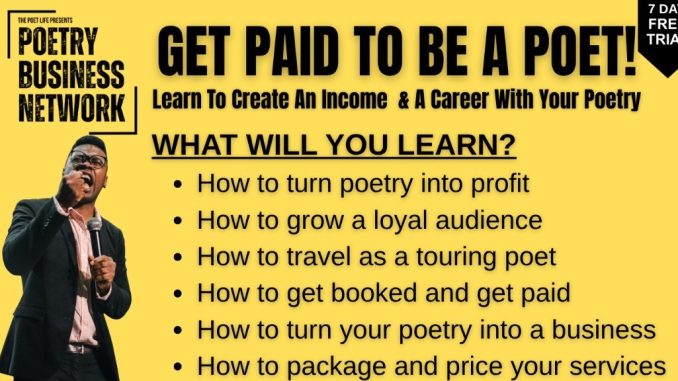
Business and poetry may seem like distant disciplines, separated by spreadsheets and stanzas, but beneath the surface, they share a common pursuit: meaning. While business often focuses on metrics, growth, and strategy, poetry is concerned with emotion, nuance, and truth. Yet, when businesses begin to think like poets, they unlock a deeper dimension of creativity, clarity, and connection. Poets are masters of language, observers of the human condition, and architects of resonance. These qualities, when applied to business, can transform how companies communicate, innovate, and lead.
One of the most profound lessons business can learn from poets is the power of precision. Poets don’t waste words. Every syllable is intentional, every line crafted to evoke a specific feeling or insight. In business, clarity is currency. Whether it’s a pitch to investors, a brand message to customers, or an internal memo to employees, the ability to communicate with precision can make the difference between confusion and conviction. Consider how Apple’s marketing often uses simple, evocative language—“Think different,” “Shot on iPhone”—to convey complex ideas with emotional impact. That kind of linguistic economy is poetic in nature, and it works because it respects the audience’s intelligence and attention.
Poets also teach us to see differently. They look at the ordinary and find the extraordinary. A leaf becomes a metaphor, a moment becomes a revelation. In business, this kind of perspective is invaluable. Innovation often begins with seeing what others overlook. When leaders adopt a poetic lens, they become more attuned to subtle patterns, emerging needs, and hidden opportunities. Howard Schultz didn’t just see coffee; he saw community. His vision for Starbucks was rooted in creating a “third place” between home and work—a concept that resonated deeply with people and redefined the coffee experience. That kind of insight requires more than analysis; it demands imagination.
Another lesson lies in emotional intelligence. Poets write to move people. They understand the rhythms of joy, sorrow, hope, and fear. In business, emotional resonance is often the missing ingredient in customer engagement and employee motivation. Data can inform decisions, but emotion drives action. A business that communicates with empathy and authenticity builds trust. Patagonia’s environmental stance isn’t just a policy—it’s a story that stirs passion. Their campaigns speak to values, not just value. That emotional clarity, reminiscent of poetic expression, creates loyalty that transcends transactions.
Poetry also embraces ambiguity. It doesn’t rush to resolve tension or simplify complexity. Instead, it invites reflection and interpretation. In business, especially in times of uncertainty, this comfort with ambiguity can be a strength. Leaders who acknowledge complexity and resist the urge to offer premature certainty are often more credible and adaptive. They create space for dialogue, experimentation, and growth. Satya Nadella’s leadership at Microsoft exemplifies this. His emphasis on a growth mindset and learning culture reflects a poetic openness to possibility, rather than rigid adherence to fixed outcomes.
Moreover, poets understand timing. They know when to pause, when to accelerate, and when to let silence speak. In business, timing is everything. Launching a product too early or too late can determine its success. Communicating a message at the wrong moment can dilute its impact. Poetic timing—rooted in intuition and awareness—can help businesses navigate these decisions with greater finesse. It’s not just about calendars and deadlines; it’s about rhythm and responsiveness.
Storytelling is another domain where poets excel and businesses often falter. A good poem tells a story, even if it’s just a glimpse. It invites the reader into a world, a moment, a truth. Businesses that tell compelling stories create emotional bridges with their audiences. They move beyond features and benefits to meaning and purpose. Nike doesn’t just sell shoes; it tells stories of perseverance, ambition, and triumph. These narratives, shaped with poetic sensibility, elevate the brand from a commodity to a cultural icon.
Finally, poets remind us of the importance of voice. Every poet has a distinct tone, style, and perspective. In business, cultivating a clear and authentic voice is essential. It’s how a brand becomes recognizable, how a leader becomes trusted, and how a company becomes memorable. Voice isn’t just about what you say—it’s about how you say it, and why. It’s the difference between generic and genuine. When businesses find their voice and use it consistently, they create a sense of identity that resonates across every touchpoint.
In a world increasingly driven by algorithms and efficiency, the poetic approach offers a counterbalance. It invites depth, humanity, and artistry into the business equation. It doesn’t reject logic or strategy—it enriches them. By learning from poets, businesses can become more expressive, more perceptive, and more connected. They can speak not just to minds, but to hearts. And in doing so, they can build brands, cultures, and experiences that endure. Because while numbers may measure success, it’s words—and the feelings they evoke—that truly define it.