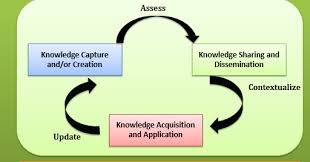
For a long time, the role of information in business was largely transactional. Organizations focused on delivering data—reports, memos, dashboards—assuming that access alone would drive insight. But as the pace of change accelerates and complexity deepens, it’s become clear that information delivery is only the starting point. What truly matters is knowledge creation: the ability to interpret, contextualize, and apply information in ways that generate value. This shift isn’t just semantic—it’s strategic. It redefines how businesses learn, adapt, and lead.
Information delivery is about transmission. It’s the process of moving facts from one place to another, often without transformation. A spreadsheet of quarterly sales figures, for example, delivers information. But unless someone analyzes those numbers, compares them to market trends, and draws conclusions about customer behavior, the data remains inert. Knowledge creation, by contrast, is active. It involves synthesis, judgment, and relevance. It’s what happens when people engage with information, ask questions, and connect dots. In that sense, knowledge isn’t something you receive—it’s something you build.
This distinction has profound implications for how businesses operate. In a world flooded with data, the challenge is no longer scarcity—it’s sense-making. Companies that excel at knowledge creation don’t just collect information; they cultivate environments where insight can emerge. That means encouraging curiosity, fostering collaboration, and designing systems that support interpretation. It’s not enough to have dashboards and databases. You need people who know how to read between the lines, challenge assumptions, and translate findings into action.
Technology plays a critical role in this evolution, but it’s not the whole story. Advanced analytics, machine learning, and AI can process vast amounts of data and surface patterns that humans might miss. But those tools still require context. They need human judgment to frame the questions, validate the outputs, and decide what to do next. Knowledge creation is a hybrid process—part machine, part mind. The most effective organizations understand this balance. They invest in tools, but they also invest in people who can think critically and creatively.
Culture is another key ingredient. Businesses that prioritize knowledge creation tend to value learning over certainty. They encourage experimentation, tolerate ambiguity, and reward insight. In these cultures, mistakes are seen as opportunities, and questions are welcomed. Leaders model curiosity, and teams are empowered to explore. This kind of environment doesn’t just produce better decisions—it builds resilience. When people are trained to think, adapt, and learn, they’re better equipped to handle change. They don’t just follow instructions—they shape strategy.
The shift from information delivery to knowledge creation also changes how we think about communication. In traditional models, communication was often one-way: a report sent, a directive issued, a presentation delivered. But knowledge creation thrives on dialogue. It requires feedback, discussion, and iteration. A team reviewing customer feedback might uncover insights not because the data was compelling, but because the conversation surfaced new perspectives. In this way, communication becomes a catalyst for learning, not just a channel for updates.
Leadership must evolve alongside this shift. Leaders who focus solely on delivering information risk becoming bottlenecks. Those who foster knowledge creation, on the other hand, become enablers. They ask better questions, listen more deeply, and create space for others to contribute. They don’t just disseminate—they facilitate. This kind of leadership builds trust and engagement. It signals that insight is a shared responsibility, and that everyone has a role in shaping the future.
Education and training also need to reflect this new reality. Teaching employees how to use tools is important, but teaching them how to think is essential. That means developing skills in analysis, synthesis, and storytelling. It means helping people move beyond data literacy to insight fluency. When employees can turn information into meaning, they become strategic assets. They don’t just execute—they innovate.
Even the way we measure success begins to shift. Metrics like data volume or report frequency may indicate activity, but they don’t guarantee impact. Businesses that focus on knowledge creation look for signs of understanding, alignment, and action. They ask whether insights are driving decisions, whether teams are learning from experience, and whether strategy is evolving in response to new knowledge. These are harder to quantify, but far more meaningful.
Ultimately, the journey from information delivery to knowledge creation is about depth. It’s about moving beyond surface-level data to uncover the insights that drive progress. It’s about empowering people to think, connect, and contribute. And it’s about building organizations that don’t just react to change, but learn from it. In a world where information is abundant, knowledge is the true differentiator. It’s what turns data into direction, and what transforms businesses from static systems into living, learning organisms. That transformation doesn’t happen overnight, but it begins with a simple shift in mindset: from delivering information to creating knowledge.